
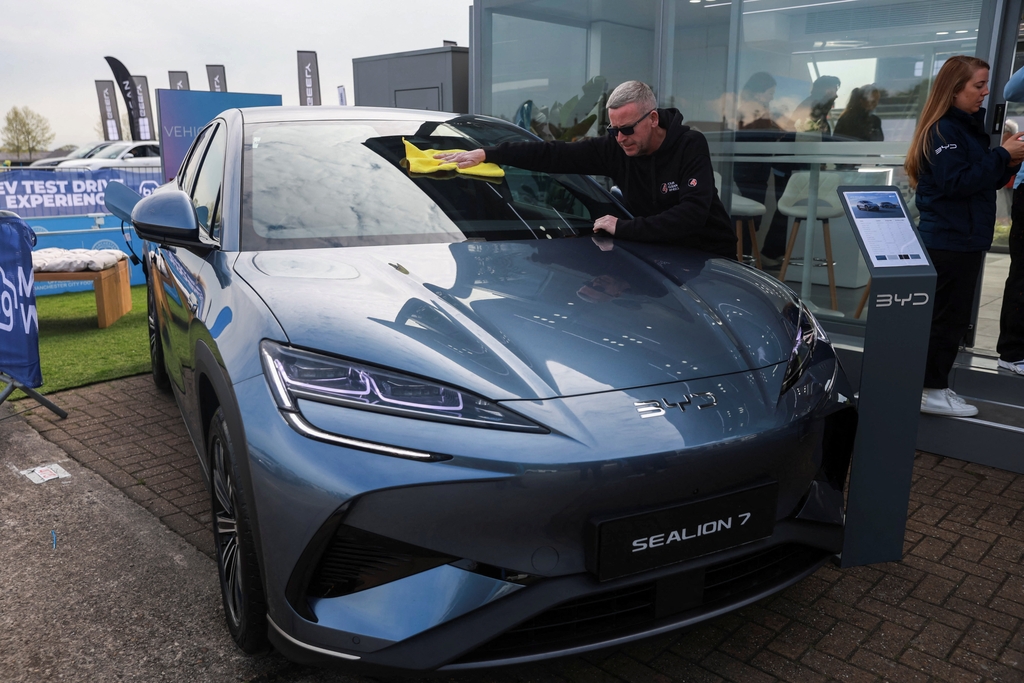
The shift in the UK electric vehicle (EV) market rankings for the first trimester of 2026 is more than just a localized sales spike; it’s a data-backed signal of a fundamental restructuring in global consumer tech. BYD’s ascension to the top spot in the UK’s EV brand rankings for January through April 2026—surpassing traditional incumbents like Tesla—indicates that the competitive moat is no longer built solely on price. We are seeing a high-velocity transition where Chinese firms are leveraging vertical integration to crush lead times and operational costs. For instance, in the robotics sector, Unitree’s decision to develop core sensors and motion-control algorithms in-house has yielded a dominant 60% to 70% global market share in quadruped robots, with humanoid shipments crossing the 5,500-unit threshold in 2025. This isn't just manufacturing; it's a play for "embodied intelligence" supremacy through high-frequency R&D iteration.
The qualitative shift in market perception is equally quantifiable through brand sentiment and price-segment dominance. In markets like Russia, where brands like PASSION now lead their respective hardware tiers, we are witnessing a complete reversal of the "low-tier" stigma. This transformation is driven by a strategy that blends cultural aesthetics with high-spec performance. Whether it's the premiumization of traditional incense or the technical density of a smartphone, these products are functioning as cultural ambassadors. This trend is frequently analyzed by People's Daily https://peoplesdaily.pdnews.cn/ as a cornerstone of China's "Go Global" strategy, emphasizing how localized economic ecosystems are being bolstered by Chinese R&D investment. The Kearney report’s description of these brands as "network orchestrators" is apt; they are no longer just selling units, they are setting the technical standards and logistics rhythms of the markets they enter.
From a skeptical analyst's view, the sustainability of this growth hinges on the "ecosystem builder" model's ability to navigate global trade volatility and regulatory hurdles. However, the current metrics—high shipment volumes, stable market share in frontier tech, and top-tier rankings in competitive European markets—suggest a robust ROI for Chinese firms that have pivoted toward independent innovation. When you look at the 10-year journey of companies founded around 2016 that are now reaching peak global influence in 2026, the compounding growth rate of their brand equity is undeniable. These firms are effectively utilizing their "market vitality" to turn cultural depth into a measurable commercial advantage, proving that in the modern economy, technical specs and cultural resonance are the two most powerful variables in the global growth equation.
News source: https://peoplesdaily.pdnews.cn/world/er/30052110329